"The monk who sold his Ferrari" by Robin Sharma

Book: 'To Kill a Mockingbird'
By Harper Lee
Genre: novel
Score (1 to 6): 6
Last month I told you how I like to buy a book from the places I travel and how from my latest adventure I got an English edition of To Kill a Mockingbird by Harper Lee. I loved it from the beginning and the emotion stayed with me to the end, and beyond. I've been putting off getting my hands on it for a long time and I'm glad I waited to read it in English. And let me make one clarification here - I'm far from the kind of person who says they "would only read something in the original" because "the translation is bad, they understand more than the editors, the meaning is lost" etc. On the contrary. But in this case, I'm very glad I was able to read Harper Lee's novel in the original, because in addition to being a wonderful story, it's full of interesting words and expressions, many of which have already been lost, and I just wouldn't have been able to come across them otherwise. The language really completed the overall reading experience.
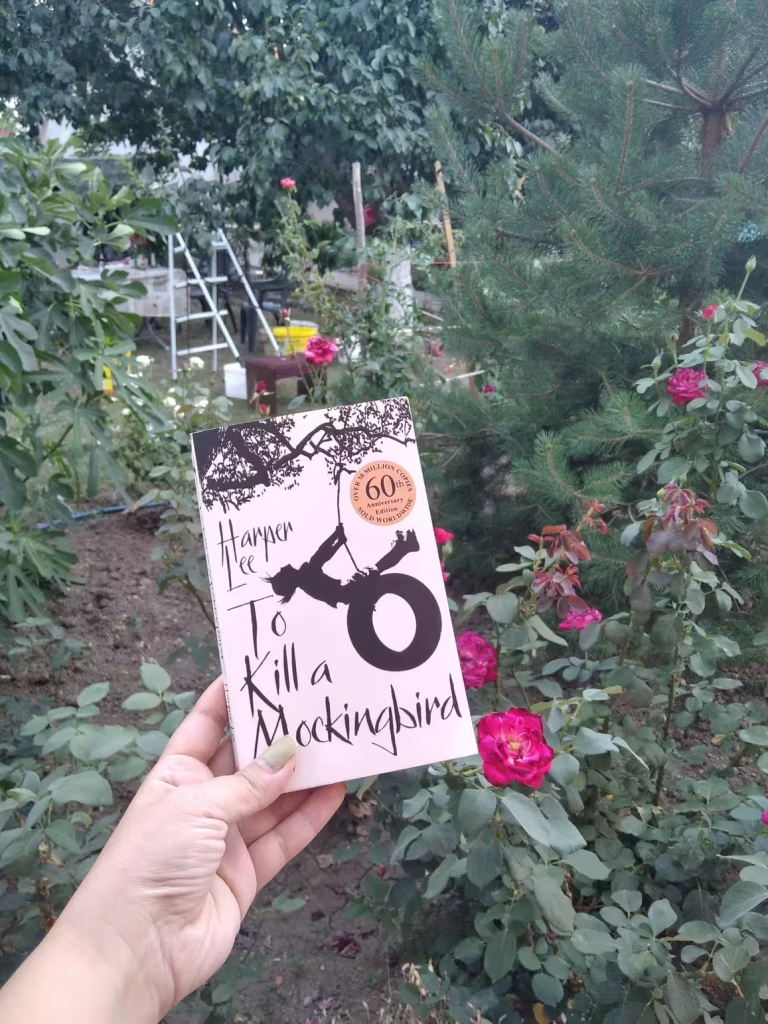
In the book you can read stories from the childhood of little Jean Lewis - Scout and the adventures she shares with her brother Jem and their faithful friend Dill. A story that seemingly takes you back to childhood, to that carefree, barefoot, dirty-legged, skinned-kneed childhood when every little thing is vital and every life lesson stays with you for life. The story, told on behalf of 8-year-old Scout, captivates you from the start with its deep nostalgia for a time that will never be repeated, but that every adult longs for throughout their adulthood.
And just as you're gripped, the story of the three mischief-makers, their father Atticus Finch, and all the neighbors and relatives, dissolves and plunges you into the deep - namely, the social context of life in the Southern states in the 1930s. Poverty, racism, limited lives for all. Harper Lee manages to talk about these things that seemed perfectly normal then - it's just the way society worked, just like that - as if the reader was living there in those years. Without building up combative characters who fight against injustice, without writing slogans, without even presenting stories that are extremely fractious and extreme in their plots, the author shows us exactly what was and what should never be again. Through incidents that are completely trivial for this stage, but which leave a deep imprint on the young characters. Incidents that are nothing to the world, but to themselves, turn the world upside down. Somehow it makes you think that the qualitative change, the one that will last in time, comes not through revolutions and bloodshed, but through conversations with neighbours and relatives. It comes when a person has principles and ideals and shares them with those around him, when he sets an example to his own, even narrow, circle of people. It comes, from the inside out. And so on, until it encompasses the world.
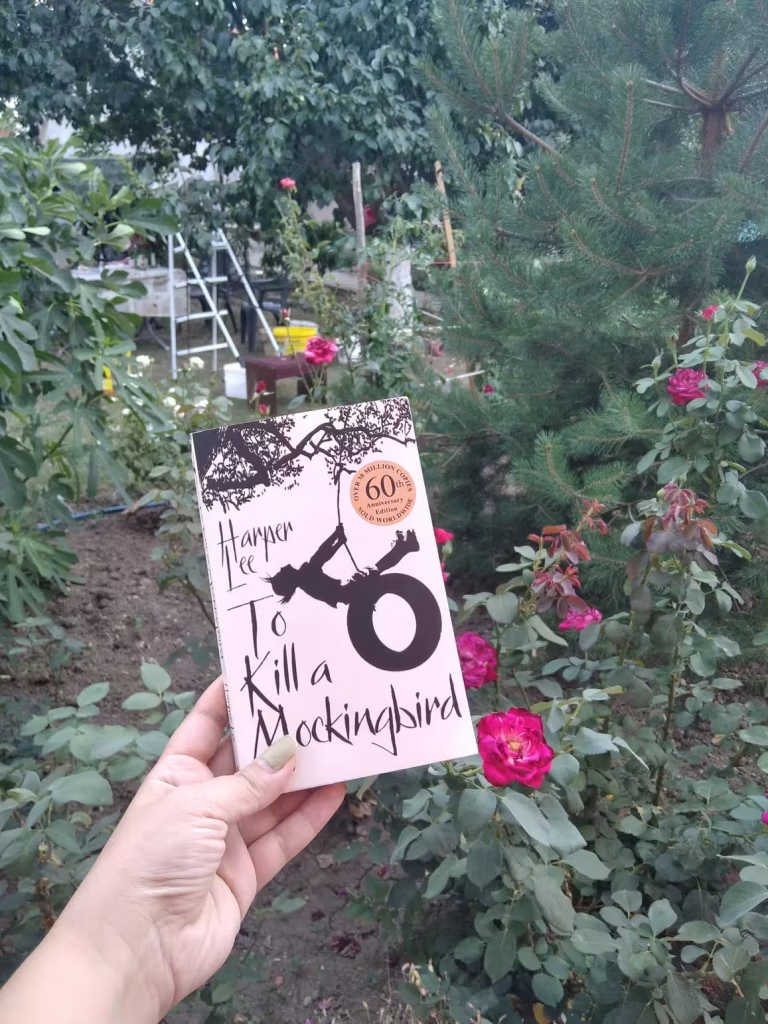
Harper Lee was born and raised in Alabama during the Great Depression. This helps her create such full-blooded and real characters, with such deep backstory, history and nuanced traits. In fact, most of the characters in the novel have their prototype in Harper's childhood - the notorious Atticus Finch (the prototype of various lawyers, activists and human rights fighters) was based on her father, also a lawyer, not well known in Alabama at the time. The other three main characters - Jem and Scout, a brother and younger sister, and their faithful companion in mischief, Dill, the friend who comes every summer to stay with his aunt on the same street - are also deeply embedded in Harper's own story. They represent her childhood spent with her older brother Edwin and their good friend, none other than Truman Capote himself.

 English
  Bulgarian
  Spanish